
Epics without an order
Name the increments and the dependency between them so the team does not start the hardest integration first by accident.
Software project planning
Software project planning is the sequencing problem: which epic comes first, what must be true before that increment starts, and how dependencies order the work. Precision Foundry turns reviewed requirements into a readiness map the team can follow.
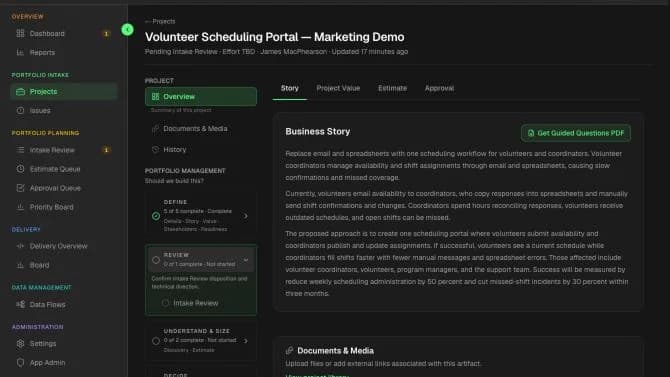
A software project plan sequences
Teams often publish a go-live date while epics, dependencies, and unreadiness live in separate decks. Software project planning should show what comes first, what is blocked, and what the first increment will actually include.
Name the increments and the dependency between them so the team does not start the hardest integration first by accident.
List the decisions, missing information, and external dependencies that must close before an epic is safe to start.
Refuse a calendar commitment until the first increment, its exclusions, and its blockers are written down.
Software project planning starts after the questions are answered. It turns those answers into epics, a readiness map, and an order the sprint can honor.
Group reviewed requirements into increments a team can finish. Each epic needs a boundary and an explicit exclusion list.
For each epic, list open decisions, missing information, and dependencies that would change the build if answered later.
Put the unblocked epic first. Park work that still sits behind a decision. Then—and only then—open delivery tracking.
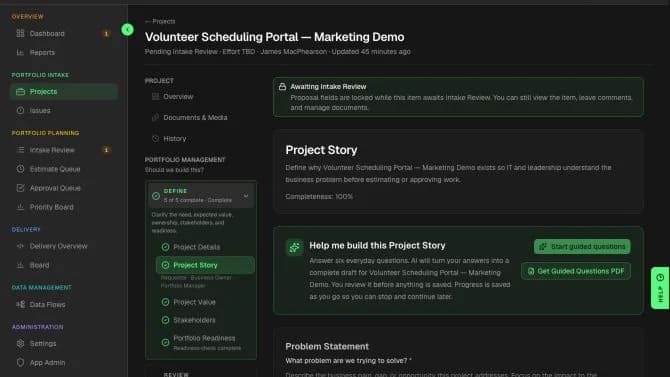
In the product
Software project planning does not recreate discovery. It sequences the requirements the team already reviewed into epics and a first increment.
Results
The plan shows which epic starts, why the others wait, and which readiness gaps remain. Later sprints pull from that map instead of inventing a new order in refinement.
Common questions
A useful plan sequences epics, maps readiness, and names the first increment. It should show dependencies, exclusions, and which decisions still block a start. It is not a portfolio ranking and it is not a request form.
After the request has reviewed requirements. Sequencing too early invents epics from a slogan. Precision Foundry shows the readiness map instead of hiding gaps behind a date.
Planning decides the order of epics and what must be true before an increment starts. Task management coordinates the work inside an increment after that sequence exists.
No. The board runs the increment. Software project planning decides which epic is ready to enter that board and what stays parked.
See the readiness map and the first increment before anyone opens a sprint.
Request Private AlphaOptional cookies
We use optional technologies only with your choice. Strictly necessary cookies for sign-in and security always run. Cookie Policy