
Generic AI questionnaires
The same prompt pack for every project hides the people, constraints, and exclusions that this request actually carries.
AI requirements gathering
AI requirements gathering is the assist problem: the model suggests project-specific questions and drafts requirements from the original request. People remain responsible for the answers, the edits, and the approval. Precision Foundry does not skip review or invent a backlog from a slogan.
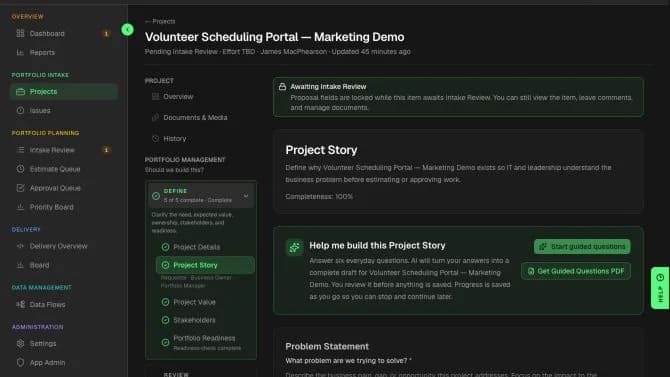
AI requirements gathering should
A chatbot that writes a backlog from a paragraph creates a second document. Reviewers cannot tell what the business user said versus what the model invented. AI requirements gathering should attach drafts to the original request and leave approval with people.
If you are still choosing a product, compare AI requirements tools by the job they actually do before you treat a generated PRD as discovery.
The same prompt pack for every project hides the people, constraints, and exclusions that this request actually carries.
An auto-accepted requirement becomes a silent assumption. Someone still has to mark what is answered, uncertain, or rejected.
Stories written from a model summary are a paraphrase. Later QA tests the paraphrase, not the request.
AI can propose questions and draft wording. Precision Foundry still requires a human to answer, edit, and review before those drafts become the spec.
The model reads the problem, people, owner, and constraints the requestor already wrote. It does not start from a blank prompt.
Follow-ups fill gaps meetings usually skip—what must stay the same, what would make the change fail, and who else is affected.
Proposed requirements stay editable. A reviewer accepts, rewrites, or rejects each one before anyone treats the set as approved.
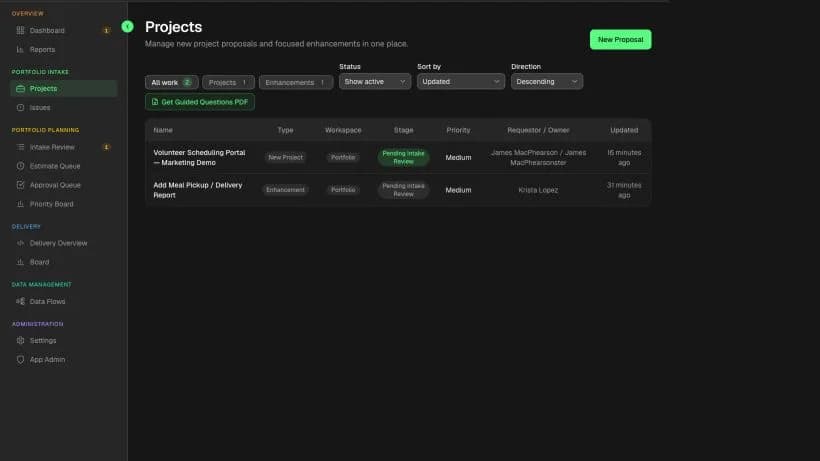
In the product
AI requirements gathering is an assist on the same thread. Precision Foundry does not export a generated backlog and call the job done.
Results
Teams get faster coverage of the questions that matter, without handing the spec to a model. The original request remains the source; drafts are candidates.
Common questions
AI requirements gathering uses a model to suggest project-specific questions and draft requirement wording from an existing software request. People still answer, edit, and approve. It is not an autopilot that turns a slogan into a backlog.
No. Precision Foundry can draft. Reviewers remain responsible for what is true, what is uncertain, and what is out of scope. An unreviewed draft is not a requirement.
Requirements gathering software is the product job: questions, answers, and a reviewable spec. AI requirements gathering is the assist on that job—faster coverage of follow-ups, still attached to the original request.
After answers are reviewed, Precision Foundry can help decompose the work. Those stories stay on the same thread. Generating stories from an unreviewed AI summary is how the spec splits.
See suggested follow-ups and a draft requirement set—then edit and review them like any other answer.
Request Private AlphaOptional cookies
We use optional technologies only with your choice. Strictly necessary cookies for sign-in and security always run. Cookie Policy