
A Word file that ages in a week
A BRD that nobody updates becomes fiction. Management means the answers still live where the work lives.
requirements management software
Requirements management software is the G2 category for keeping requirements current, reviewable, and testable. Precision Foundry is the reviewable-gathering side of that category: questions and answers on the original software request, not a DOORS-style audit vault for regulated hardware programs.
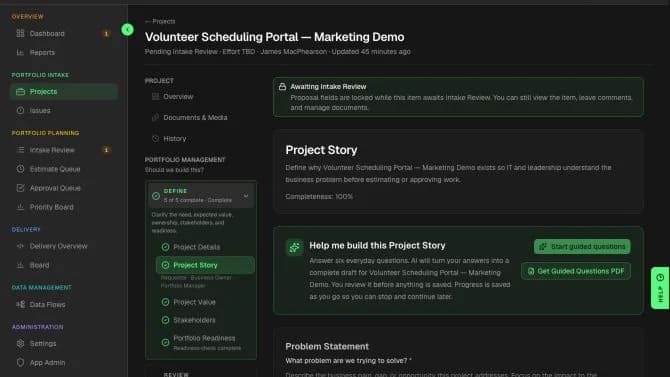
Requirements management software should
Requirements management software usually means Jama, Polarion, or DOORS: baselines, variants, and audit evidence for regulated products. Most internal software teams need something narrower. They need requirements that stay attached to the request, survive review, and reach the people who test. That is still requirements management. It is not an ALM migration.
Enterprise platforms and intake-to-delivery systems also appear in our side-by-side look at AI requirements products. Match the job first; management is how those answers stay current.
A BRD that nobody updates becomes fiction. Management means the answers still live where the work lives.
If only specialists can find a requirement, the department that made the request has already left the conversation.
When the sprint backlog becomes the only current document, QA tests a paraphrase. The original request is gone.
Treat management as keeping answers current on one thread. Gather from the request, review in the open, and let later work point at those answers. Baselines and variant matrices are a different product.
Questions and answers attach to what the requestor wrote. A new document is how the spec splits.
Someone marks what is accepted, uncertain, or rejected. A hallway agreement is not management.
Stories and tests should open the reviewed requirement, not a rewritten ticket title.
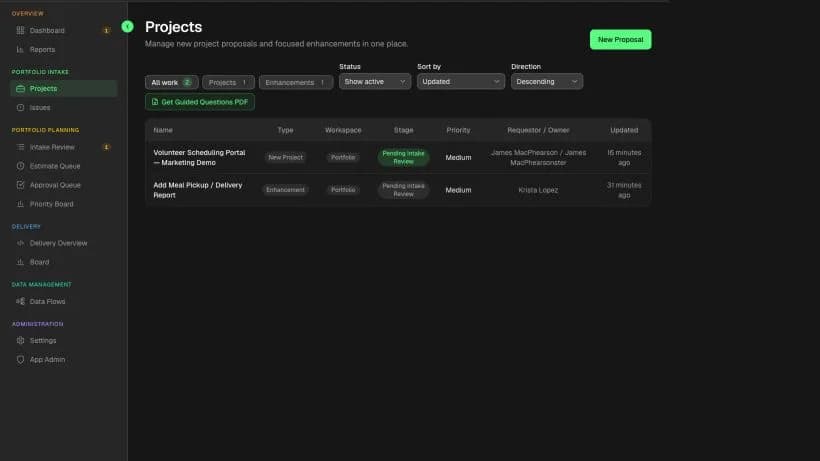
In the product
Requirements gathering software is the discovery job. Requirements management software is the category name buyers search. Precision Foundry does the first job and keeps the answers managed on the same thread.
Results
When requirements management software is built for software teams, the spec does not drift into a vault or a backlog. Reviewers can still find what the business asked for when the work is in flight.
Common questions
Requirements management software stores, reviews, and traces requirements across a change. Enterprise suites add baselines and compliance evidence. Precision Foundry covers the software-team version: reviewed answers that stay attached to the original request through delivery and test.
Not for regulated hardware programs that need formal baselines and variant management. If you need an audit vault, those tools exist. If you need a reviewable software spec that a department manager can help write, this is the closer fit.
Gathering is elicitation: questions and first answers. Management is keeping those answers current and traceable. Precision Foundry does both on one record. The two phrases are how buyers search the same job at different moments.
You can. The useful version is a view of the reviewed answers, not a second file that ages in SharePoint. Write the document from the request. Do not retire the request when the document exists.
See how a reviewed answer stays attached when stories and tests begin—without standing up an enterprise ALM program.
Request Private AlphaOptional cookies
We use optional technologies only with your choice. Strictly necessary cookies for sign-in and security always run. Cookie Policy